
Humanity Is Slowly Becoming Its Own Ghost
As Systems Strangle Life, the Human Spirit Suffocates in Mandates and Machines

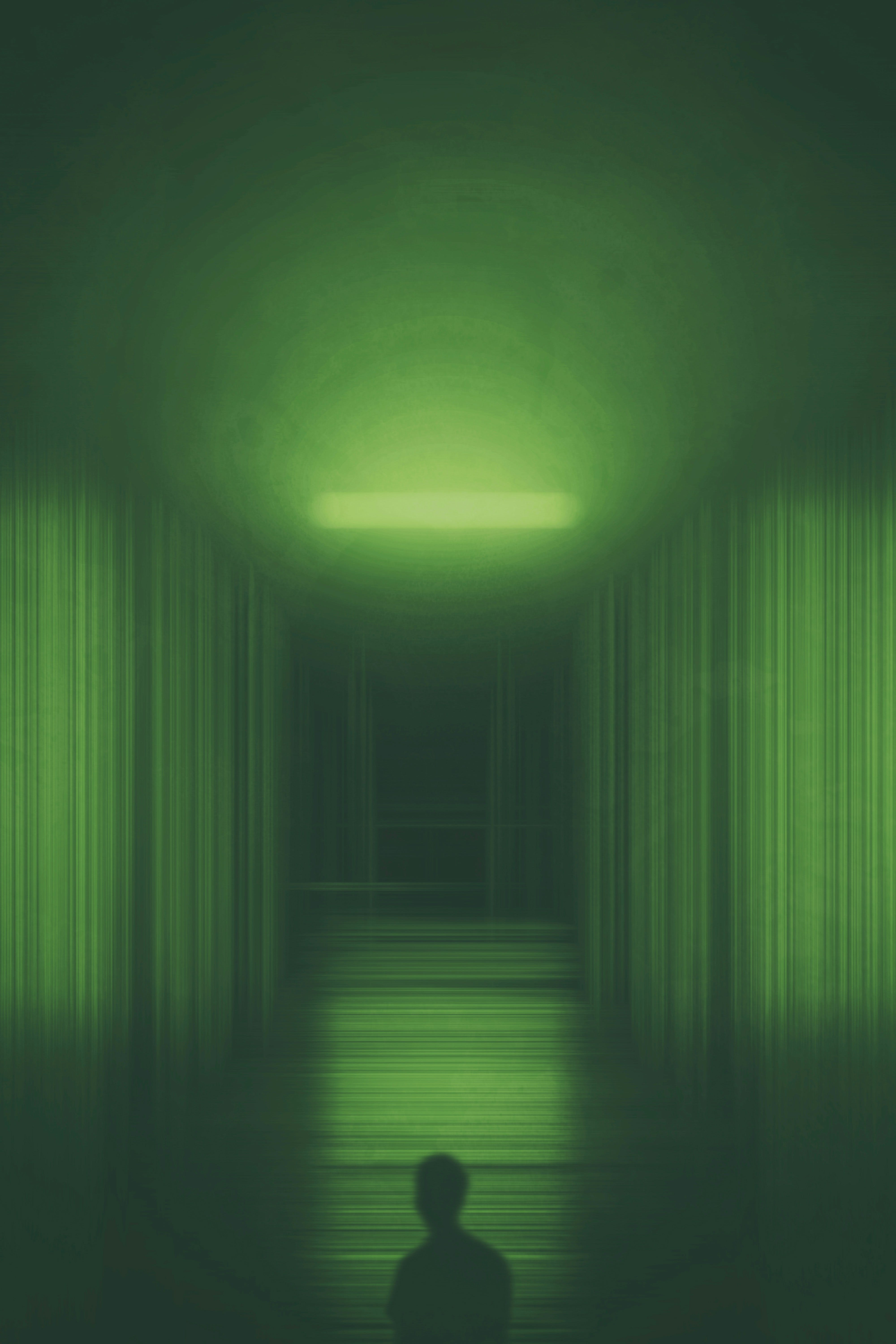
The Iron Grip of Bureaucracy
If you’ve been paying attention to the shifting tides of the last few years, you’ll know this feeling: the world is breaking into pieces. However, it’s not some grand catastrophe, no violent earthquake or war. Instead, it’s a slow, suffocating erosion, like a body dying from the inside out. The problem isn’t in the lack of solutions, it’s in the strangling grip of systems so mechanical and hollow in meaning, that what has made humanity has begun to crumble beneath their weight. Bureaucracy is consuming us whole.
Take any venture, any dream that dares to create something outside the status quo. What happens? It’s dragged into the gears of bureaucratic hell, where meaning doesn’t exist beyond numbers and ticked boxes. You’re told to jump through hoops and prove your worth. But the real kicker? Your worth is never really measured in what you’re creating, what you’re contributing. It’s in the paperwork. The form. The process. The rules.
And here’s the cruelest irony: these rules are set by people who have nothing at stake. They sit behind a screen, detached from the real world, their job merely to monitor and enforce the rules that keep things from changing. They don’t care about your project. They don’t care about the outcome. They only care about the mandate. Did you check all the boxes? Did you adhere to the standards? Because if you didn’t, you’ll never get a penny. And you’ll never get a chance to make anything real. Adherence is the king, and humanity is locked in chains to serve it.
Robots in Human Clothing
We live in an age where everyone is pretending to be alive but no one is really living. You’ve had the experience—you talk to someone, pitch your idea, try to spark something, anything, and all you get is blank stares. Their eyes aren’t empty because they don’t hear you; they’re empty because they’ve been trained not to hear anything outside the script.
There’s no morality in these conversations, no empathy, no raw human connection. Instead, you’re met with robotic responses that pretend to care. Cold predictability. The layer of politeness is still there, but underneath it, there’s nothing. Not even a trace of life. It’s a game of ticking boxes, but the rules don’t even align with the real world. You talk about real issues and yet the response is, “Sorry, it doesn’t fit within the guidelines.” That’s it. There’s no attempt to stretch the boundaries, to break the mold. Just endless adherence to the fucking mandates.
In the eyes of the bureaucrats, your project isn’t a solution. It’s a potential liability. They are more comfortable financing software that has no impact on the real world than putting money into something that might require actual human effort, actual physical work. It’s not about supporting the oceans or fixing the debt economy. It’s about the numbers, the metrics, and the approvals. Process over substance. If your idea can’t fit within the standardized, digitized framework, it’s irrelevant.
The Hollow Echo of Meaning
We’ve reached the point where humanity’s core virtues—morality, empathy, creativity—have been reduced to mechanical jargon. These words used to mean something deep and transformative. They guided our interactions, our decisions, our societies. But today, they are just placeholders. Definitions that no one dares question, but no one truly embodies either.
Morality isn’t about guiding your right and wrong anymore. It’s about adhering to the rules enforcing you what is right and wrong. Empathy is no longer about understanding another’s pain or joy; it’s about managing relationships as a business transaction. Creativity isn’t the spark of new ideas or art; it’s the predictable, calculable process of generating value within the constraints of market demand. You’re not creative if you break the mold; you’re creative if you find a way to make the system work better, more efficiently.
In the quest for digital utopias, for “efficient” systems, we’ve stripped away the very things that made us human. Life used to mean the unpredictable, the spontaneous, the messy, the alive. Now, it’s reduced to algorithms, to processes, to metrics. Human touch is relegated to automated responses, to scripts that allow us to “interact” with each other, but never to connect. We adhere to the systems, the structures, and in doing so, we lose ourselves. We lose the vitality of human existence.
Parallel Realities: Splitting Apart
The most unsettling aspect of this breakdown is the growing divide in reality itself. There are now two worlds, two streams of existence, that are no longer capable of meaningful interaction. On one side, there are those who adhere to the mandates, the systems. They live by the numbers, they breathe the rhetoric of efficiency and digitalization, and they don’t question the structures that have been built to ensure that nothing changes. They don’t care about the problems you’re solving, they only care about the data that supports their position.
And then there are the rest of us, the ones who see through the gaping cracks, who still believe in the power of human ingenuity, creativity, and compassion. We’re still clinging to the idea that we can create, that we can improve, that we can solve problems that really matter—as caretakers. But these two worlds are drifting further and further apart. One is stuck in a sterile, robotic wet dream of perfection; the other is desperately trying to keep the human spark alive in a world that seems intent on suffocating it and itself along with it.
There’s no crossover anymore. The gulf between these parallel realities is too wide to bridge. Those who’ve fallen into the bureaucratic void can’t see the worth in anything that doesn’t comply with their prescribed metrics. They won’t listen, because they don’t need to. They’ve chosen the path of “efficiency” over humanity.
The End of Spontaneity: A Society of Empty Adherence
The most tragic consequence of all this is the death of spontaneity. There was once a time when human beings could act on impulse, create without permission, and take risks without needing to justify every step. But that’s no longer the case. We live in a world where even creativity has to go through layers of approvals, processes, and committees. You want to build something? Fine. But you have to show that it fits. You have to prove that it works according to the rigid standards that have been set by those who have never had to struggle to create anything meaningful.
We’ve outsourced every part of ourselves to systems that don’t even care to understand us. We’ve become robots in human form, operating within the boundaries of pre-programmed rules. Where is the spark that once defined us as human? Where is the creativity that emerged from chaos? Where is the passion, the drive to do something simply because it’s worth doing, not because it fits within the construct of an accepted mandate?
This is the real tragedy. We’ve sacrificed the essence of what it means to be alive for the false comfort of compliance. We’ve embraced the rules over the spirit. We’ve accepted a world that doesn’t ask questions, doesn’t challenge, and doesn’t create—because that’s easier. But is it living? Is it human? Is it anything more than a shell?
Takeaways: The Reality We’ve Chosen
Bureaucracy is the real oppressor: The real danger isn’t in the lack of solutions. It’s in the fact that solutions are smothered under a mountain of rules and mandates that prioritize compliance over impact.
We’ve traded empathy for efficiency: Human connection has been reduced to cold transactions. Morality is now about adhering to the process, not understanding one another or striving for something greater.
Spontaneity is the casualty of a mechanized world: The life we once celebrated, the chaotic, creative force that defines humanity, is being replaced by sterile systems that strip away everything human for the sake of predictability.
Two worlds are emerging: One where the system runs everything, where nothing can exist outside the rules, and another where people still cling to the belief that creation, freedom, and risk matter. These worlds can no longer coexist meaningfully.
We’ve forgotten how to live: In our quest for a more efficient, “better” world, we’ve forgotten what it means to be alive. To be spontaneous. To take risks. To fail. And in doing so, we’ve created a world that isn’t just losing its humanity—it’s lost its soul.