
Like Mice in a Maze, Stuck at the Start
A structural look at disengagement, meaning loss, and why modern systems stop responding to participation—through the lens of Calhoun’s Universe 25.

On a sidenote, I’ve seen Calhoun’s “Universe 25” experiment circulate repeatedly online over the last few years, usually framed as a kind of dystopian warning or biological curiosity. Regardless, what makes it worth revisiting now is not the experiment itself, but the last thirty years that followed Calhoun’s death. The world that emerged after 1995—smartphones, algorithmic platforms, permanent connectivity, and large-scale digital mediation of reality—is the first environment that meaningfully resembles the conditions his work was pointing toward. I hope this reads as a wake-up call.
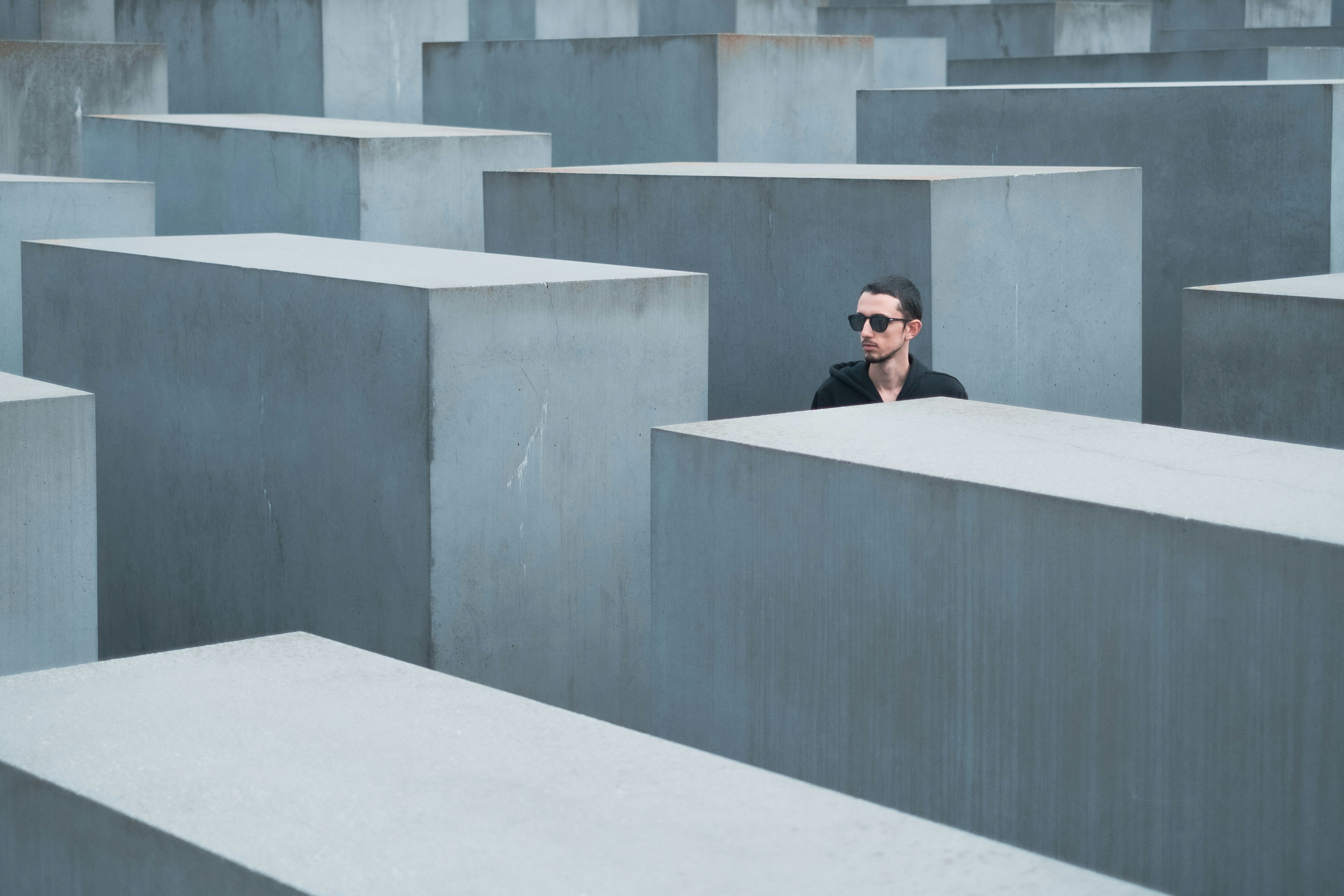
In the late 1960s, John B. Calhoun constructed an environment intended to remove struggle entirely. The experiment is usually described as a study of mice, but that description is misleading in a way that matters. What Calhoun was actually testing was not survival, intelligence, or resilience, but what happens to behavior when survival becomes trivial. He wanted to see what remained when necessity disappeared. The result was not flourishing, but something quieter and far more unsettling.
For a time, everything worked exactly as expected. The population grew, the environment remained stable, and nothing external threatened the system. From the outside, it looked like proof that abundance solves conflict and removes failure. But beneath the surface, behavior was already thinning out, long before resources were strained or space became limited. The collapse did not begin with scarcity or violence, but with the erosion of meaningful participation.
What failed first was not the body, but orientation. The mice did not stop functioning because they were weak or maladapted, but because the system no longer required them to become anything in particular. Roles filled faster than new ones could form, hierarchies lost their function, and effort stopped producing consequence. Young mice entered a world where everything essential was already handled, leaving no pathway into relevance. They were alive, but structurally unnecessary.
This is where the experiment becomes difficult to dismiss as irrelevant to humans. Modern societies are not short on resources, information, or tools. They are short on structures that make participation feel real. Increasingly, effort feels symbolic rather than consequential, contribution feels detached from outcome, and presence feels interchangeable. When systems stop responding to internal signal, disengagement becomes a rational response rather than a personal failure.
Much of what we now call apathy or withdrawal (even increasingly high suicide rates among the youth relate to this) is better understood as a refusal to participate in systems that no longer provide orientation. People are not opting out because life is too hard, but because it feels oddly hollow despite constant stimulation and bombardment with information. The problem is not a lack of opportunity, but an excess of options that carry no real weight anymore. When nothing is required, nothing feels worth doing.
This is why material explanations consistently fall short. Economic pressure matters, but it does not explain why disengagement accelerates even when conditions improve. Historically, hardship forced cooperation, hierarchy, and meaning through necessity. Abundance removes that pressure faster than new organizing principles can emerge. When the old structures dissolve without replacement, people do not rebel first; instead they start to drift.
One of the defining features of the current moment is the outsourcing of reality itself. Meaning, value, and legitimacy are increasingly deferred to external systems, metrics, platforms, and consensus narratives. At the same time, trust in those systems erodes, creating a paradox where individuals seek validation from structures they no longer believe in. The result is chronic hesitation, waiting for permission from a world that no longer feels authoritative.
This produces a particular kind of exhaustion. Not the fatigue of overwork, but the fatigue of constant self-maintenance without direction. Energy is spent managing identity, appearance, and perception rather than building anything that pushes back. Like Calhoun’s “beautiful ones,” the system rewards immaculate surfaces while offering no reason to extend beyond them. Withdrawal becomes safer than commitment because commitment has no clear return benefit.
What makes this moment especially unstable is that the collapse itself is quiet. There is no single breaking point, no dramatic failure that forces recognition. Instead, participation decays through indifference, declining birth rates, social retreat, and disengaged labor. Systems continue to operate, but fewer people feel internally bound to them. Life goes on, but the underlying coherence thins out.
As you might expect, Calhoun did not believe his experiment was a prophecy of doom. He believed it was a warning about environments that remove challenge without replacing meaning. The mice could not redesign their world, but humans on the other hand can. That requires acknowledging that abundance alone is insufficient, and that systems must demand something real in return for what they provide. Without that demand, participation collapses not from despair, but from irrelevance.
The question, then, is not how to motivate people to re-engage, but how to rebuild structures that actually respond to engagement in the first place. Meaning cannot be imposed, incentivized, or outsourced to external authority. It emerges when effort meets consequence and when presence actually matters inside a system. Until that alignment returns, withdrawal will continue to be labeled as some sort of disease, even though it is often the most coherent response available.
For Whom It May Concern
What keeps standing out to me is that this kind of misalignment never resolves itself over time. It doesn’t correct through more technology, more growth, more books, or better optimizations in life. Once a system drifts far enough from lived coherence, returning to alignment requires deliberate effort and an honest look at the full structure, not just its visible symptoms. Without that wider view, most fixes quietly recreate the same conditions they claim to solve.
The work I’m involved in exists because of that realization. Not as a belief system or an answer, but as a way of orienting toward environments where engagement can actually mean something again. Where effort produces consequence, and presence isn’t something cosmetic. Whether through writing, ongoing research, or small, focused gatherings, the goal is simply to make coherence viable where it’s currently missing.
Universe 25 matters to me not because it predicts collapse, but because it shows what happens when necessity is removed without meaning being rebuilt. Seeing that clearly changes what you try to design. And once you see it, it’s impossible to unsee.
For more information of NEXUS, our 1:1 sessions, transmission events, books and other items, please visit our website: TheNexusFormula.com.
This is not happening by accident.
It is unfolding deliberately, in plain sight.
You don’t need hidden files or secret rooms to see it. You only need to notice what is rewarded, what is automated, and what is quietly made unnecessary.
People choose comfort. Not because they are weak — but because the system is built to make comfort feel like safety.
And that is exactly the trap Universe 25 exposes: a world where survival is solved, but meaning is not rebuilt.
Everything now falls under the same trajectory: optimization without purpose, convenience without consequence, progress without coherence.
Call it what you want.
Transhumanism.
Agenda 2030.
Technological salvation.
Names don’t matter.
Direction does.
A system that replaces necessity replaces humanity. And once that line is crossed, there is no neutral ground left.
You either remain human by choice —or you are optimized out of the equation.
It's very creepy especially because it involved young people with no purpose in life. They are already trained in the easiest way. Luxury make them lazy. In the western world nowadays, everything is there; they push a button and it rolled out. So they can't learn anything even if they have studied, no jobs are available. It's so sad because they can't become what they choose once when they came in this world.
I'm very angry about this and wish that they open their eyes! Don't accept it, take courage, make some together, be not afraid.