
The Silence Around Our Fastest Minds
Why young people are changing faster than our institutions can understand.

Over the past few days, my words reached more than 13,671 people. What struck me most was the sheer sense of recognition.
Something fundamental is shifting. Not “more giftedness,” but different behaviour, different sensitivity, different speed. Young people asking existential questions long before expected. Responding not to authority but to authenticity. Not to reward, but to meaning.
And still—silence.
Where are the researchers? The professional bodies?
With a few exceptions: deafening silence.
The world is changing faster than institutions can follow. Instead of renewal, we produce labels and care-funded interventions. When deviation automatically becomes a care request, it tells you everything.
In recent days, I spoke with several seasoned professionals. Courageous people. People who dare to say the system no longer fits. That takes courage.
So here’s an invitation to experts and industry organisations:
shift your perspective. Step outside your own comfort zone.
A few years ago, I learned that “control” over one’s life is relative. That insight felt like freedom. My first conscious breath.
And since then, I see differently.
Not a guru.
Not a traditional coach.
But someone with experience in complex decision-making and systemic thinking. And in that work, I noticed the same recurring pattern:
Analysis.
Conceptualisation.
Rationalisation.
Brilliant patterns — and sometimes a strategy to keep the core at a safe distance.
They weren’t looking for a better conversation.
They were looking for someone who wouldn’t look away.
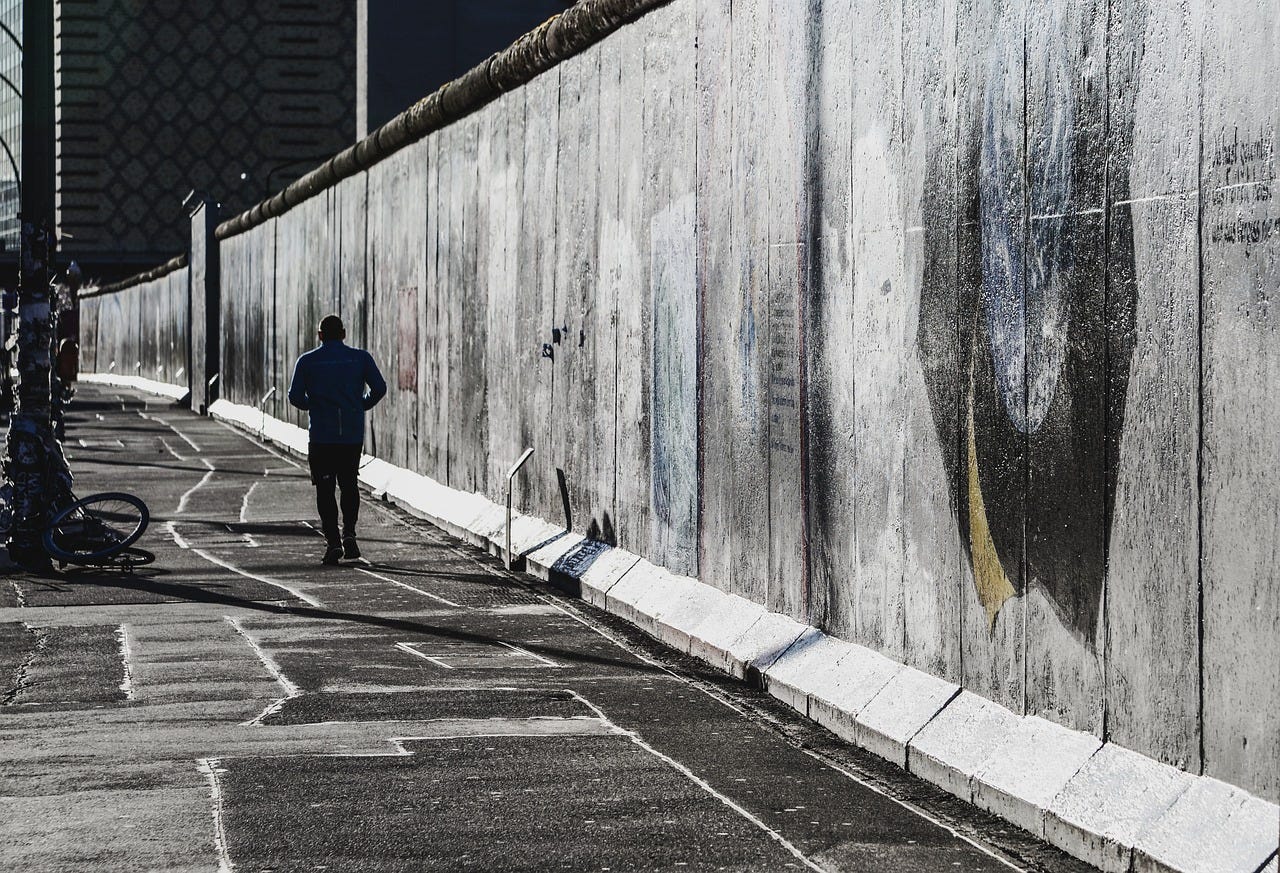
That’s why I’m redefining my work. I’m learning something new. In Berlin, I’m building a small physical space. Coffee. Bikes. Conversation.
I’ll also offer a limited number of masterclasses and one‑on‑one conversations — for those who aren’t looking for a programme, but for a different level of dialogue.
And maybe this: don’t take yourself too seriously. Read. Listen. Step outside the rat race. For instance: We Did Ok, Kid by Anthony Hopkins.
A society impoverishes when divergent intelligence is medicalised.
It flourishes when it is understood.
Run Rabbit Run.
But not for me. Not anymore.
— Ron


For those approaching this from an academic perspective:
Understanding begins with experience.
The body is not incidental to cognitive development. Beliefs influence physiology. Thoughts activate biochemical processes. Emotions correspond to measurable electrical and hormonal responses.
When we approach giftedness purely cognitively, we miss the embodied dimension of perceiving, processing, and responding. That is my point.
Perhaps that is where part of the blind spot lies.
— Ron
I had to smile at the “deafening silence” part, because yes, exactly: where are the researchers and professional bodies? It’s always fascinating how quiet it gets when something fundamental begins to shift.
Funny thing is, I was once taught that “silence equals agreement.” I never really bought that rule (for some people who remember the Mavericks Substack: the example with the pen I found in the classroom), but if we apply it now, and on our terms, then that same silence towards this equals the same agreement. LOL! Roles do have a way of turning around.
What I find encouraging, though, is that this shift isn’t just some vague youth rebellion. I’m seeing thoughtful, educated, experienced young people—people with sharp minds and real-world exposure—stepping slightly outside the established narrative and asking, quite bluntly: what exactly are we doing here? That takes courage. Especially when there’s so much to lose.
Because let’s be honest: systems protect themselves. Through degrees, certificates, institutional authority—or sometimes simply by blocking dialogue altogether (you know what/who I mean, ironically enough). And that, in the context of this conversation about silence, is both sad and strangely telling.
So yes, I think the invitation is desperately needed. Especially in a place like Berlin, where experimentation and intellectual courage have always had a home. Spaces for real dialogue feel timely.
Something is shifting. Whether institutions acknowledge it or not really doesn’t matter. It’s about doing it, or making way for those who will (or get trampled).
Looking forward to seeing where this goes.